



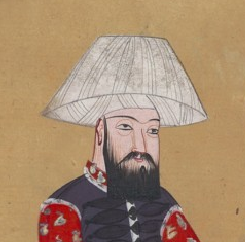
 The lampshade-like hat worn by certain high-ranking court officials.
Site Menu
- Women’s GarbPiece by piece
- An Illustrated Guide to the Layers
- Don | Underpants
- Çakşır | Trousers
- Gömlek | Shift
- The Cut of Extant Gömleks
- Zıbın | Short underjacket
- The Perplexing and Obnoxious History of the Zıbın
- Kürdiye, Çuka, Kürk | Overcoats
- Arakiyye and All the Trimmings | Hat, veil, hatband, scarves
- Ziynet | Jewelry
- Pabuç and Mest | Shoes
- Hairstyles
- Ottoman Turkish Garment Gallery
- Clothing DetailsFabrics, colors, patterns, dimensions, and other details
- Types of Fabric
- A Brief Note About Jacquards and Brocades
- Terms of Measurement; or, Tell Me What Year You’re In and I’ll Tell You How Tall You Are
- Color Names
- Capturing Lost Patterns
- Slaves’ Clothing
- Garment Lengths in 1624
- Stage 1 of Geeky Statistical Analysis
- Pigments in 16th-Century Miniatures
- Janissaries’ Uniforms
- Articles
- Identifying GarmentsBy look or by name
- Turkish HousesAnd material culture
- NamesTurkish Muslim, Greek, Armenian, and Jewish
- Resources
- Women’s GarbPiece by piece
-
Recent Posts
Categories
Hi there, I just discovered your blog and I’m very intrigued by historical Ottoman dress! I wondered if in your research you’ve come across any specifics about the Syrian side of things? Seeing as Syria had its own long held history of textile production as well as embroidery and so on, I just wondered if there were variations of styles or whether they were similar at all. I am trying to research historical Syrian dress but outside of folk crafts and specific textiles like silk, it’s not easy to pin point the full outfits in their eras. Sorry as this is somewhat unrelated to your Istanbul focused blog, I am just desperate for a lead in my own research 🙂